

Product Information
$17.00
KAWS Carts 1000mg fuse street-art cool with high-potency vaping—collectible designs, smooth hits, and strong effects in a convenient format. While appealing for artistic fans, the gray-market status brings authenticity and safety concerns—always verify sources, prioritize lab-tested products, and consume responsibly in legal areas.
Kaws Carts 1000mg: The Collectible High-Potency Vape Cartridge Phenomenon
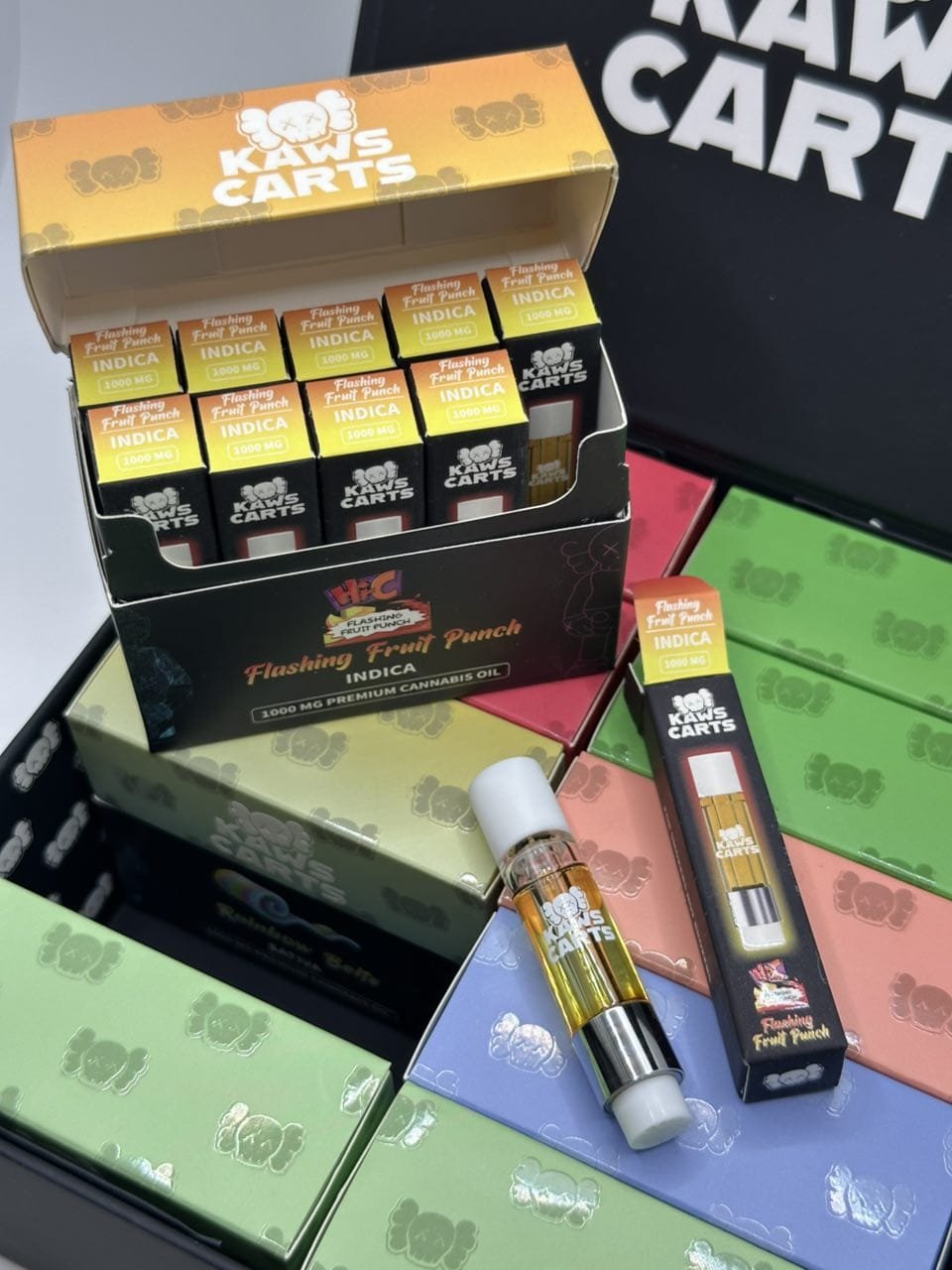
Kaws Carts 1000mg refers to a line of premium THC vape cartridges (often 1g or 1000mg capacity) featuring designs inspired by the iconic street artist KAWS—known for his signature Companion character, bold colors, and pop-culture commentary. These carts blend artistic packaging with high-concentration cannabis oil, creating a product that’s as much a collectible as it is a vaping device. Marketed as “KAWS Carts” or “KAWS Bar” variants in some lines, they typically contain 1000mg (1 gram) of THC distillate or premium extract, pre-filled in glass cartridges compatible with standard 510-thread batteries.
The appeal lies in the fusion of street art aesthetics and potent cannabis delivery: sleek glass bodies adorned with KAWS-inspired graphics (e.g., X-eyes, Companion motifs), paired with claims of lab-tested, pesticide-free oil delivering smooth, consistent hits. These carts are positioned as a luxury or novelty option in the black-market and gray-market vape scene—often sold alongside moonrocks, edibles, or themed disposables under the broader KAWS branding umbrella.
What Are Kaws Carts 1000mg?
Kaws Carts 1000mg are commonly sold as pre‑filled cannabis oil cartridges claiming 1 gram (1000 mg) of distillate in each cart. They typically appear in bright, eye‑catching packaging that leans heavily on streetwear and art‑style aesthetics. Many sellers promote them as high‑THC, “top shelf” cartridges with strong flavors and heavy effects.
However, unlike licensed, regulated brands that operate within legal cannabis markets, Kaws Carts are widely reported as unregulated street carts. That means:
-
No consistent, verifiable company identity behind the product
-
No clear, official website listing licensed facilities or test results
-
No guaranteed lab testing for potency or contaminants
Because of this, Kaws Carts 1000mg are often discussed more as a packaging concept that anyone can fill, rather than a real, vertically integrated cannabis brand.
For SEO, it’s key to acknowledge both the popularity of the name and the underlying safety concerns so that your article provides value, not just hype.
Kaws Carts Packaging, Branding, and Visual Appeal
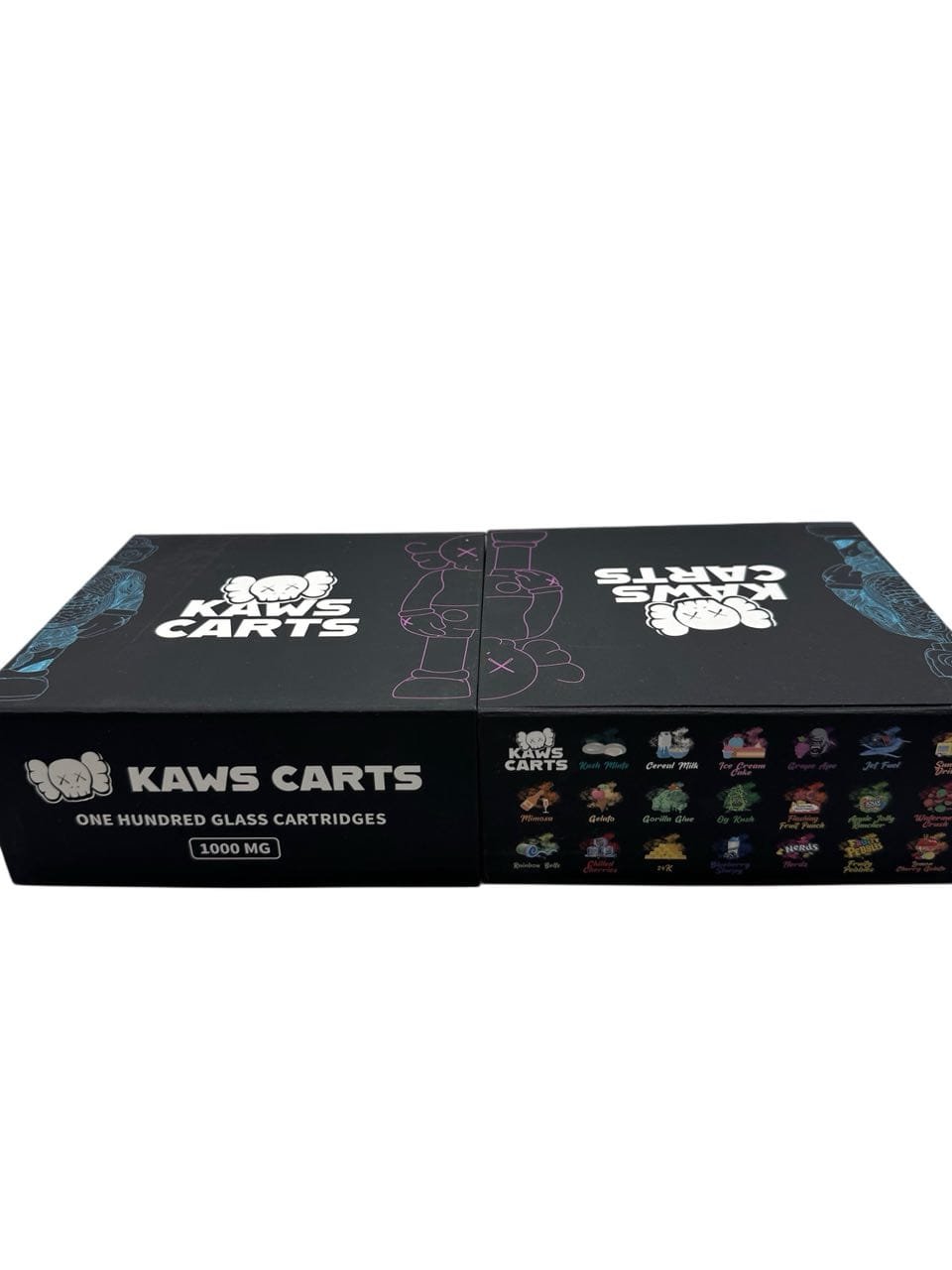
One of the main reasons Kaws Carts 1000mg are popular in online chatter is the packaging. The designs typically feature:
-
Bright colors and cartoon‑like graphics
-
Names that mimic popular strains or candy flavors
-
Glossy boxes or mylar bags loudly displaying “1000mg” on the front
This aesthetic targets younger consumers and social‑media culture. People often buy them because they “look cool,” not because they have verified lab results or a known grower/extractor behind them.
From an educational perspective, you can note:
-
Packaging can be easily bought online by anyone
-
Printed “1000mg” and strain names do not prove potency or safety
-
Visual branding alone is not a reliable sign of quality
That contrast—flashy packaging vs. unknown contents—is an important angle that sets your content apart from thin, low‑value product blurbs.
What Does “1000mg” on Kaws Carts Actually Mean?
On a genuine, regulated cartridge, “1000 mg” usually means:
-
1000 mg total oil (1 gram), not necessarily 1000 mg of THC
-
THC percentage is listed separately (for example 90% THC, 10% terpenes and other cannabinoids)
With Kaws Carts 1000mg, the “1000mg” marking is often not backed by transparent lab data. It may simply indicate:
-
The cart is physically a 1 g cartridge
-
The number is being used as a marketing buzzword for “strong”
Because there is no central, verified Kaws brand with published lab tests, different batches could contain:
-
Different THC levels
-
Different diluents or cutting agents
-
Different terpenes or flavor chemicals
Your readers should understand that, with unregulated carts, “1000mg” is just ink on a box—there is no guarantee the numbers are accurate.
Kaws Carts Real or Fake: The Core Problem
With licensed brands, “fake vs real” usually means counterfeit copies of a legitimate, regulated product. With Kaws Carts 1000mg, the situation is more complicated:
-
There’s no clearly verifiable, legal Kaws company behind the brand
-
Packaging is widely sold online empty, allowing anyone to fill and seal carts
That means every Kaws Cart you see is effectively “unverified”. Even if a seller insists they are “real,” there’s no official source to compare against. This is exactly the risk that health organizations and lab testing advocates highlight: street carts can contain:
-
Unlabeled THC strengths
-
Residual solvents
-
Pesticides
-
Heavy metals from low‑grade hardware
-
Cutting agents that may be unsafe to inhale
In content terms, you can help readers by:
-
Explaining that the safest option is a licensed brand with traceable lab results
-
Warning that Kaws packaging alone does not prove anything about the oil inside
This provides genuine harm‑reduction and sets your article apart from pure promotion.
Common Claims About Kaws Carts 1000mg
Across social channels, forums, and word‑of‑mouth, Kaws Carts are often described in marketing language like:
-
“Super gassy” or “exotic”
-
“1000mg of pure fire”
-
“Highest THC on the market”
-
“Lab‑tested and safe”
The problem is that these are claims without proof. Anyone can write “lab‑tested” on a box. Properly regulated products:
-
Publish a scannable QR code
-
Link directly to a lab Certificate of Analysis (COA)
-
Show batch numbers, test dates, and labs used
Without this, consumers are being asked to trust the seller’s word instead of verifiable data.
For a blog post, you can structure a section around “Marketing Hype vs. Verified Facts” and walk readers through exactly what to look for.
Potential Effects of Kaws Carts 1000mg
If a Kaws Cart is actually filled with potent THC oil, users may experience the same kind of effects as other high‑THC distillate vape carts:
-
Fast‑onset euphoria
-
Relaxation or sedation
-
Changes in perception, focus, or mood
-
Dry mouth, red eyes, increased appetite
But because you don’t know what is in the cart, you also can’t predict:
-
How strong it really is
-
Which terpenes are present
-
Whether there are contaminants or unexpected additives
Some people report feeling normal “high” effects from Kaws carts, while others report harsh hits, strange taste, or feeling unwell. The variation itself is a warning signal.
If you’re writing for users, you can emphasize:
-
Everyone’s tolerance is different
-
Unregulated carts carry extra risk
-
Any sign of burning in the chest, chemical taste, or unusual symptoms is a reason to stop using the product immediately
Are Kaws Carts Legal?
Legality depends on where you live and what exactly is in the cartridge:
-
In regulated cannabis states or countries, legal THC carts must come from licensed producers and be sold through licensed shops
-
Street carts like Kaws are generally outside that legal framework
-
If they contain delta‑9 THC and are not from a licensed operator, they are usually illegal in the eyes of the state regulators
In some regions, sellers market Kaws Carts as “delta‑8” or “hemp‑derived,” but again, without lab tests there is no way to verify. You can advise readers to:
-
Check local laws for THC, delta‑8, and hemp products
-
Understand that possession of unregulated carts may still carry legal risk
This adds legal awareness, another dimension of value for your long‑form article.
How to Spot Safer Alternatives to Kaws Carts
Rather than simply saying “never use X,” a more helpful approach is to show readers what better options look like.
Characteristics of safer, regulated vapes:
-
Licensed brand identity
-
A real company name with addresses and license numbers
-
Presence on official state cannabis portals where applicable
-
-
Transparent lab testing
-
QR codes on every package
-
COA pages with THC %, other cannabinoids, and contaminant tests
-
-
Clear strain and ingredient info
-
Exact strain name and type (sativa, indica, hybrid)
-
Terpene or flavor breakdown
-
Carrier oils or additives explicitly listed (or confirmed as none)
-
-
Real distribution network
-
Sold through actual dispensaries and verified retailers
-
Not exclusively offered by random “plugs” on social media
-
By showing what good looks like, your content educates users who might otherwise only see street options like Kaws Carts 1000mg.
Why Unregulated 1000mg Carts Are Risky
The “1000mg” label, especially on cheap, untested carts, has become a symbol for a certain type of underground marketing. Risks include:
-
Inconsistent potency – one cart might be mild, the next might be overwhelmingly strong
-
Unknown diluents – oils added to thin out the distillate can be harsh or unsafe
-
Poor hardware – bad metals, cheap coils, or weak seals can leach contaminants or leak
-
No recall system – if a batch is contaminated, there is no official way to track or recall it
From a health perspective, the most serious risks have historically come from illicit, untested cartridges, not from regulated dispensary products. That’s why health authorities repeatedly recommend staying away from carts without verifiable lab testing, even if they carry a flashy brand name like Kaws.
Harm Reduction Tips for People Who Still Choose to Use Them
Some readers will use Kaws Carts 1000mg anyway, no matter how many warnings they read. For them, harm reduction content is more useful than pure scolding. You can suggest:
-
Avoiding any cart that tastes strongly chemical, perfumy, or burnt
-
Taking very small hits and waiting to see how the body responds
-
Never buying from sellers who can’t explain where the oil comes from
-
Not mixing heavy cart use with alcohol or other drugs
-
Paying attention to chest discomfort, coughing fits, or unusual symptoms, and discontinuing use if they occur
This type of section shows you’re more interested in real‑world safety than just chasing clicks.
Kaws Carts vs. Licensed 1000mg Cartridges
To give readers a useful frame of reference, you can compare Kaws Carts 1000mg with a hypothetical licensed 1000 mg cart:
-
Brand transparency
-
Kaws: no standard, verifiable company backing
-
Licensed brand: regulated producer with published license numbers
-
-
Lab testing
-
Kaws: claims may be printed, but rarely backed by scannable COAs
-
Licensed brand: test results available per batch, often required by law
-
-
Quality control
-
Kaws: anyone can fill the packaging with any oil
-
Licensed brand: seed‑to‑sale tracking, batch IDs, recall mechanisms
-
-
Price vs. safety
-
Kaws: may be cheaper per gram, but with much higher unknowns
-
Licensed brand: often more expensive, but with documented quality
-
This comparison helps your readers understand why a “cheaper” option might not really be cheaper when you factor in health risk.
Final Thoughts: Should You Use Kaws Carts 1000mg?
KAWS Carts 1000mg fuse street-art cool with high-potency vaping—collectible designs, smooth hits, and strong effects in a convenient format. While appealing for artistic fans, the gray-market status brings authenticity and safety concerns—always verify sources, prioritize lab-tested products, and consume responsibly in legal areas. If you’re chasing that KAWS vibe with serious THC punch, approach with caution and enjoy the clouds!
Kaws Carts 1000mg FAQs
1. What are Kaws Carts 1000mg?
Kaws Carts 1000mg are prefilled vape cartridges that are usually advertised as containing 1 gram (1000 mg) of cannabis oil. They come in flashy, streetwear‑style packaging and are often marketed as high‑THC, “exotic” or “designer” carts.
In practice, Kaws is not a clearly established, licensed cannabis brand in regulated markets. The name is mostly attached to packaging that many different people can fill with whatever oil they choose. Because of that, quality and contents can vary widely from seller to seller.
2. Are Kaws Carts 1000mg real or fake?
“Kaws Carts” as a concept are real in the sense that the packaging exists and people sell them. The issue is that there is no transparent, verifiable company behind them the way there is with legitimate licensed brands.
Empty Kaws‑branded packaging can be purchased by anyone, then filled with unverified oil and sold as “Kaws Carts 1000mg.” That means:
-
There is no trustworthy way to know who actually produced the oil.
-
There is no consistent standard for potency, ingredients, or safety.
From a safety standpoint, Kaws Carts should be treated as unregulated street carts, not as a properly licensed brand.
3. Is Kaws Carts 1000mg a licensed brand?
There is no widely recognized, state‑licensed company publicly operating under the Kaws Carts name in legal cannabis markets. Licensed brands usually:
-
Publish license numbers and facility details.
-
Provide batch‑specific lab test results (COAs).
-
Are listed by licensed dispensaries and state databases.
Kaws packaging does not reliably come with that level of transparency. That’s why many experienced consumers consider it a “fake brand” or “trap‑cart” rather than a legitimate label.
4. How much THC is in a Kaws Cart 1000mg?
The packaging often claims 1000 mg, but that number usually refers to the total oil weight, not verified THC content. With licensed cartridges, you’ll see a specific THC percentage printed and backed by a lab report (for example: 1 g cart, 90% THC = 900 mg THC).
With Kaws Carts 1000mg:
-
The actual THC percentage is unknown.
-
Different batches could be very different strengths.
-
There is no way to confirm the numbers without independent lab testing.
Assuming a precise THC amount based only on the box is not safe or accurate.
5. Are Kaws Carts 1000mg safe to use?
There is no guarantee of safety with Kaws Carts because:
-
The oil source is unknown.
-
Lab results are not independently verifiable.
-
Anyone can fill the packaging with any mixture of distillate, flavoring, and cutting agents.
Potential risks include:
-
Inconsistent potency (much stronger or weaker than expected).
-
Residual solvents, pesticides, or heavy metals.
-
Harmful diluents or thinners that are not safe to inhale.
For harm reduction, regulated, lab‑tested cartridges from licensed dispensaries are much safer choices.
6. How can I tell if a Kaws Cart is fake?
With Kaws Carts, the more important question is whether the cart itself is unregulated, not whether the packaging is “authentic.” Some general red flags you can share with readers:
-
Sold only through social media “plugs,” gas stations, or random websites.
-
No scannable QR code that takes you to a real COA from an independent lab.
-
Packaging with typos, blurry logos, or obviously low‑quality printing.
-
No ingredient list, batch number, or manufacturing information.
-
Oil that looks unusually dark, murky, or full of suspended particles.
For any vape cart, if you cannot verify the producer and the lab tests, it’s best to assume it is unsafe.
7. Why are Kaws Carts 1000mg so controversial?
They are controversial because:
-
The name trades on hype, art, and streetwear culture while offering no real transparency.
-
Packaging is widely resold and refilled, so there’s no consistency.
-
Health authorities and experienced users have repeatedly warned about unregulated carts in general.
Many people are attracted by the visual design and the promise of “1000 mg,” but the lack of verified information makes them a poor choice compared to legal, tested products.
8. What do Kaws Carts 1000mg feel like?
If a Kaws Cart is filled with high‑THC oil, effects can be similar to other strong distillate carts:
-
Fast‑onset head high.
-
Euphoria, altered perception, and relaxation.
-
Possible side effects like anxiety, racing heart, dry mouth, and red eyes.
Because there is no consistent formulation, one cart can feel mild while another can feel overwhelmingly strong, even if the packaging looks identical. That unpredictability is part of the risk.
9. What flavors do Kaws Carts 1000mg come in?
Online listings often advertise Kaws Carts in strain‑inspired or candy‑style flavors such as:
-
Gelato, Wedding Cake, Blue Dream, Sour Diesel.
-
Fruit or candy themes like “Strawberry,” “Grape,” or “Sour” profiles.
Again, these names are printed on the packaging only. They do not guarantee the actual strain, terpenes, or ingredients in the oil.
10. Are Kaws Carts legal?
Legality depends on your local laws and what’s inside the cart:
-
In regulated cannabis states, legal THC carts must come from licensed producers and be sold through licensed retailers.
-
Unregulated street carts, including Kaws Carts 1000mg, generally do not meet those standards.
-
In prohibition or gray‑area regions, any high‑THC cart can carry legal risk.
Users should always check their local laws regarding THC vapes, delta‑8, and hemp‑derived products, and understand that unregulated carts sit in a legally risky zone.
11. Can Kaws Carts 1000mg be lab‑tested?
Yes. If someone already owns a cart and wants to know what’s in it, the only reliable way is to send a sample to a qualified cannabis testing lab (where that service is available). A proper lab test can identify:
-
Actual THC and other cannabinoid levels.
-
Pesticides, solvents, and heavy metals.
-
Some cutting agents or unusual additives.
For content, you can recommend lab testing as the only real way to know what a specific cart contains.
12. Are there safer alternatives to Kaws Carts 1000mg?
Yes. Safer alternatives include:
-
Cartridges from licensed brands in legal markets.
-
Products sold through regulated dispensaries with verifiable licenses.
-
Vape carts that provide QR‑linked COAs showing batch‑specific lab results.
-
Brands that list ingredients clearly and avoid unnecessary additives.
Guiding readers toward these options gives your FAQ real value and supports harm reduction.
13. Why do people still buy Kaws Carts if they’re risky?
Common reasons include:
-
Eye‑catching packaging and social‑media hype.
-
Lower prices compared to legal dispensary products.
-
Lack of access to regulated markets in their area.
-
Not being aware of the safety issues surrounding unregulated carts.
14. What harm‑reduction tips should someone know if they still use them?
If a reader chooses to use a Kaws Cart anyway, you can suggest basic harm‑reduction steps:
-
Start with very small puffs and wait to see how you feel.
-
Stop using immediately if there is a strong chemical taste, burning sensation, or unusual symptoms.
-
Avoid mixing heavy cart use with alcohol or other drugs.
-
Never give unregulated carts to inexperienced or underage users.
-
When possible, transition to verified lab‑tested products.
This keeps your FAQ realistic and user‑focused instead of purely promotional.
15. What is the main takeaway about Kaws Carts 1000mg?
The key message to emphasize in your content:
-
Kaws Carts 1000mg are unregulated, packaging‑driven products with no consistent, verifiable brand behind them.
-
There is no reliable information about THC content, ingredients, or safety unless a specific cart has been independently tested.
-
For health and legal reasons, regulated, lab‑verified cartridges from licensed producers are strongly preferable.
| Flavors | CANDY JACK, JET FUEL, MIMOSA, GORILA GLUE, CHERRY LIME, SUNDAE DRIVER, COOKIES N CREAM, FRUITY PEBBLES, ICE CREAM CAKE, GRAPE APE, KUSH MINTS, 24K, NERDZ, CEREAL MILK, OG KUSH |
|---|
Reviews
There are no reviews yet.